
Reviving the customer experience at SBS
For the past 5 years SBS had been measuring customer satisfaction, and every year the score was to put it bluntly, terrible. There was no designated person to drive customer satisfaction forward so it just stayed stagnant.
And that was for no longer, as I was about to give Customer Satisfaction a major glow up.
+7 → +38.2
Annual NPS, 2024 to 2025
3,500
employees globally
across 50 offices
25
workshops
I faciliated
4.8/5
average feedback score
My Role
Customer Satisfaction Intern, then Lead at SBS from March 2025 to June 2026.
What I did
Research, content strategy, journey mapping, behaviour-change design, e-learning, workshop facilitation, internal comms, website design.
Constraints
A brand new initiative. No other team members aside manager. Language barrier (many employees don’t speak fluent English), budget limited, time pressure from higher ups.
Confidentiality
Unfortunately I can’t show everything I’ve done due to privacy concerns. Anything shown has been approved or had confidential information removed.
01
The problem
On the surface my manager just wanted to improve the NPS
On my first day, my manager sat me down with a ‘kick off for customer satisfaction’ slide deck. Most of it pointed at one figure, NPS +7, and it needed to be +25 by September.
My background is psychology and human-computer interaction design, so being given just a score to reach doesn’t really mean much to me. I was interested in what was behind the score, and who was driving it.
I gave this feedback and I was pleasantly surprised that I could go away to research properly, then come back to me with an approach I thought was better.
With that instruction, off I went to Paris where SBS HQ is so I can talk to those moulding the customer experience in person.
02
The research
Asking questions is what I do best.
So I asked lots of them.
Plenty of customer feedback had shown repeated comments of slow response times, expensive software and products that didn't always do what customers needed.
It was important to actually talk to the people that drove this feedback. So that’s exactly what I did.
Five findings
1
Customer insight wasn't reaching everyone
4
Teams weren’t always connected.
2
The customer journey wasn’t understood properly from end to end.
5
Customer satisfaction wasn’t consistently visible.
A customer problem? Nope, definitely not.
This is an awareness and action problem entirely based inside the walls of SBS.
3
Knowing wasn't enough to change behaviour.
Looking back on the feedback, it was obvious that the solution was more than responding faster to ticket enquiries.
People needed to understand the customer, see how their own work touched them, and most importantly have something concrete to do about it.
03
The strategy
Three words,
Listen, Understand, Act.
In parallel with the strategy I created a communication plan which addressed 17 topics including AI, sharing the customer voice, and social media. This is the communication plan overview.
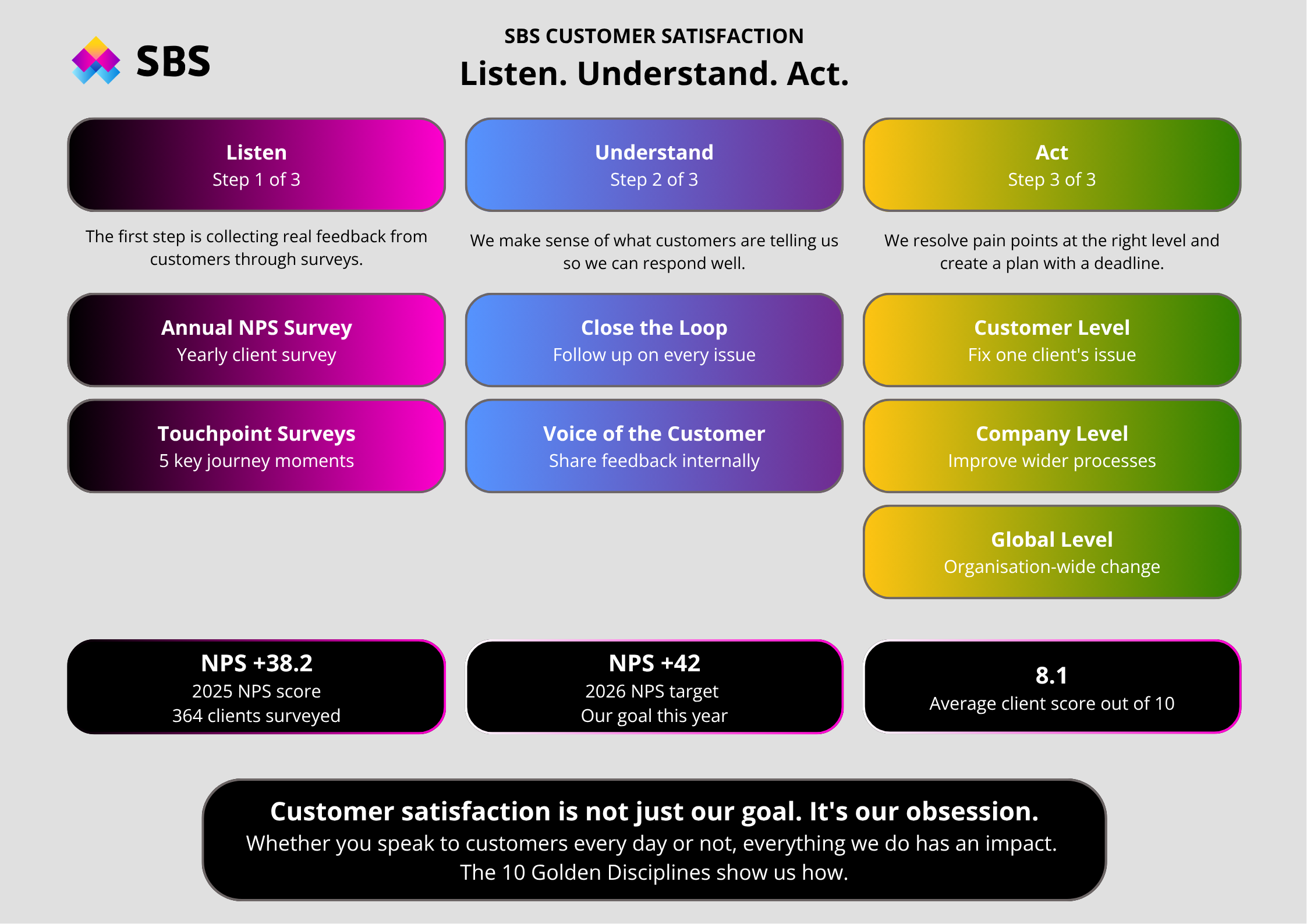
To accompany this, I knew the framework needed to be simple, so that anyone reading it could understand the goal. The below framework was used after approval, and everything we did going forward was based on these 3 steps.
Step 1 of 3
Listen
Collect real feedback from customers, continuously and at the moments that matter.
Step 2 of 3
Understand
Make sense of it, and get it in front of the people who can use it.
This is a poster I made to be printed internally for employees to understand the framework and what customer satisfaction was doing to improve the customer experience.
Step 3 of 3
Act
Resolve pain points at the right level, with an owner and a deadline attached.
04
The customer
is a person too
We needed to build empathy
So how do we make employees build authentic empathy for the customer experience?
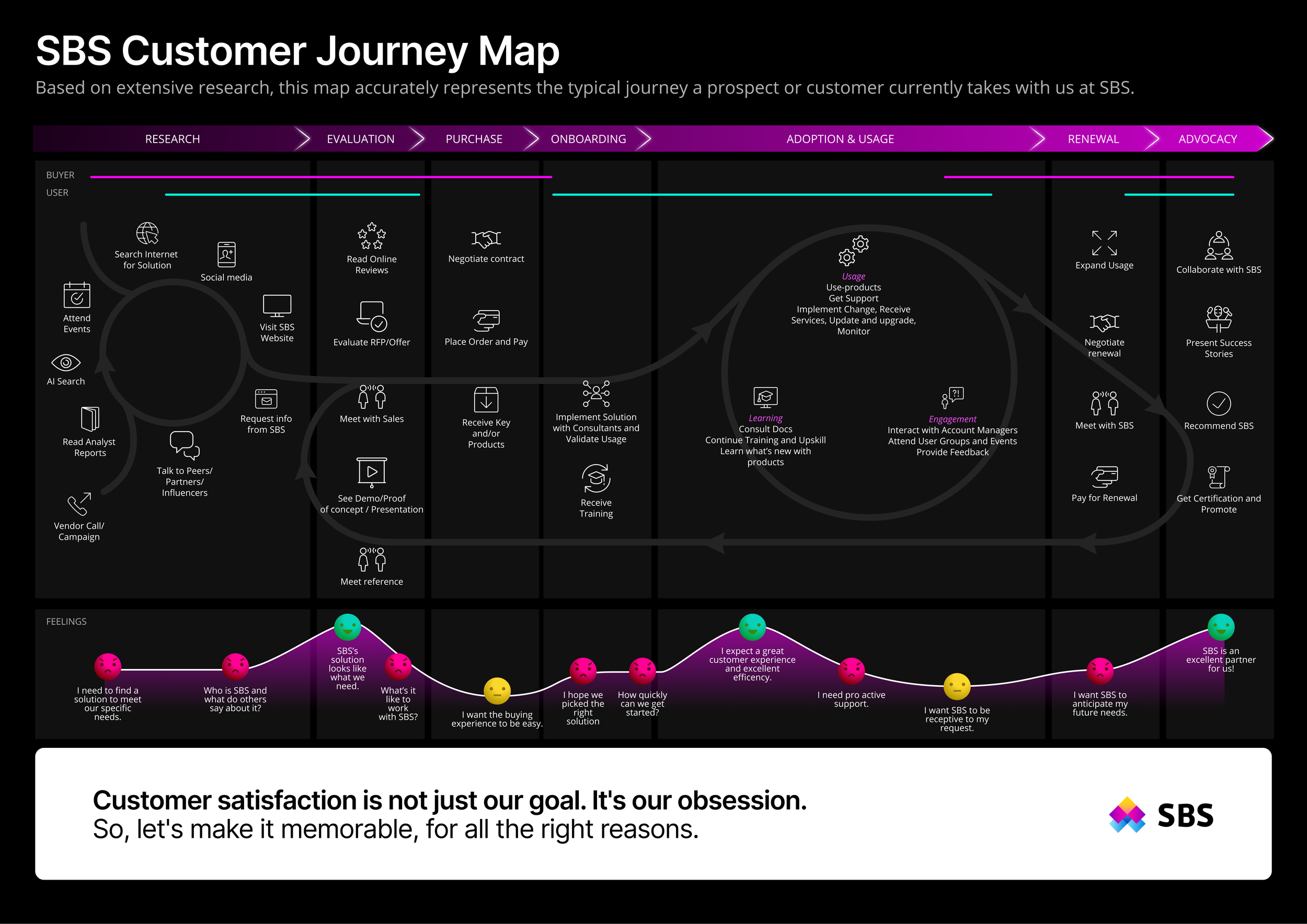
Well, I’m pretty sure a customer journey map is a good start. Many employees weren’t aware of the customer’s experience out of their own department. So showing them this was crucial.
Before I joined SBS, a map had already been made, but this was based on another company’s research of their customers, not ours. This was a problem.
So, instead of starting from scratch because that would be pretty silly, I refined it using our own customer and stakeholder insight, added touch points that were missing such as AI Search, and adjusted the emotions across the journey so they matched what customers were actually telling us.
But, who are SBS’s customers?
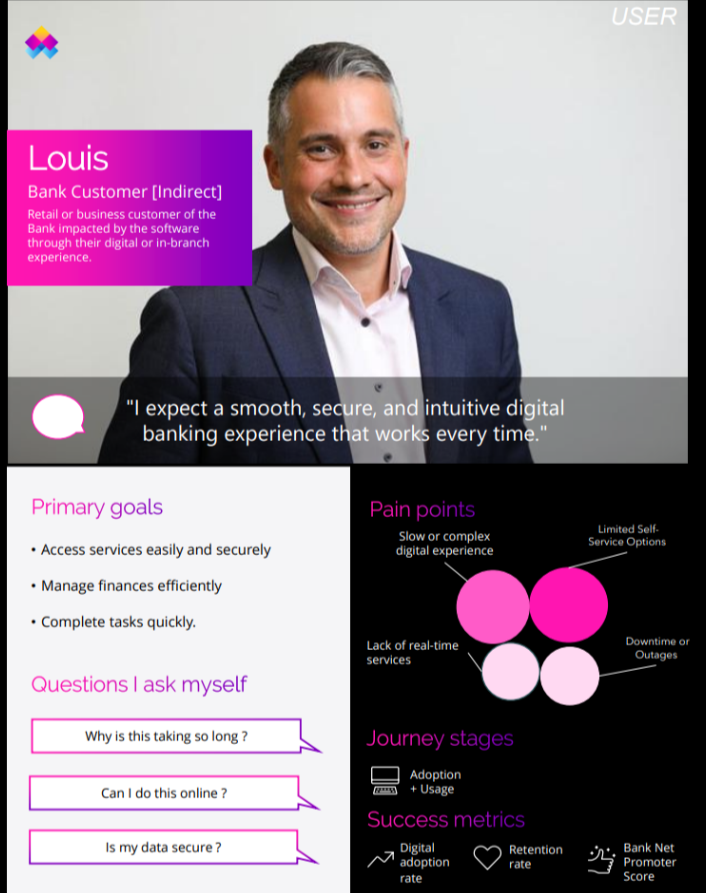
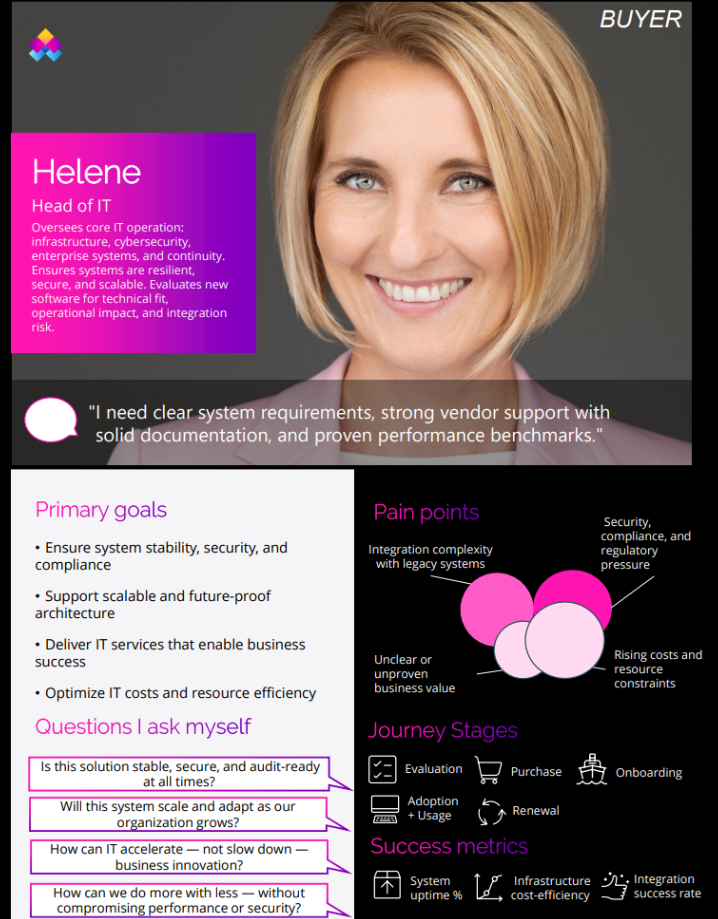
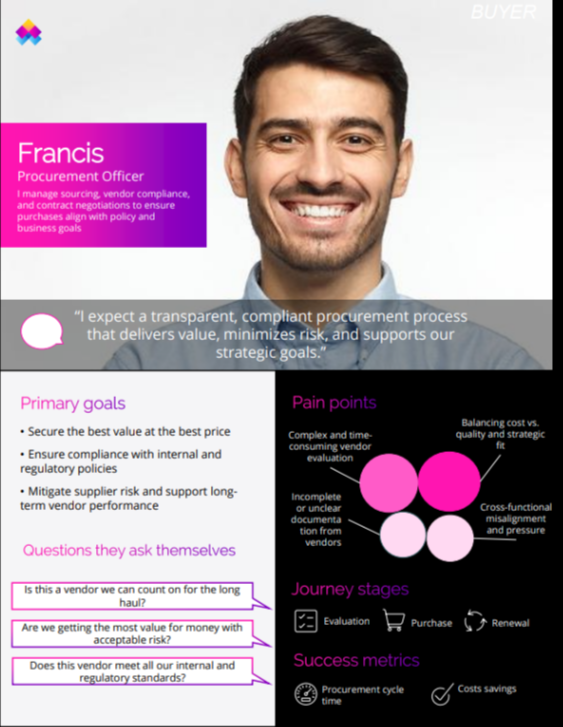
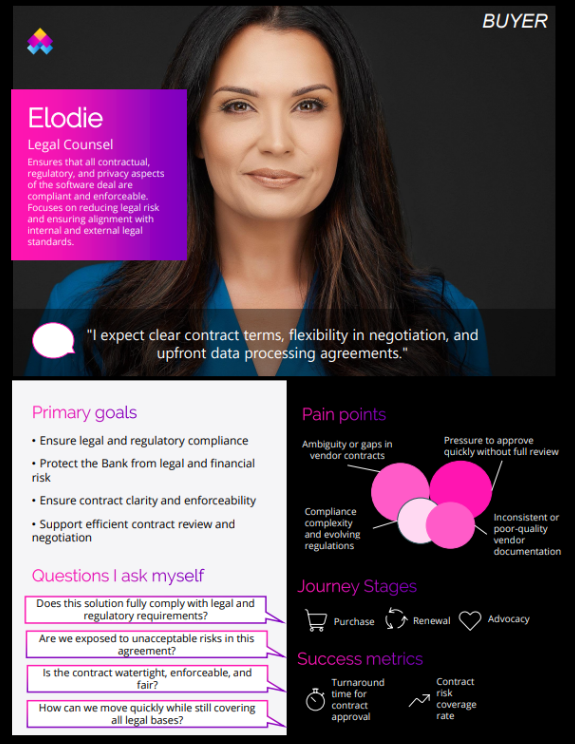
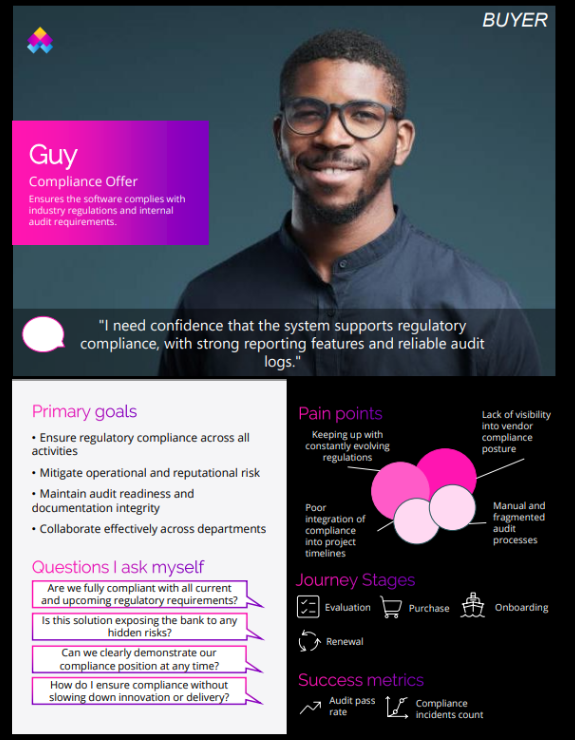
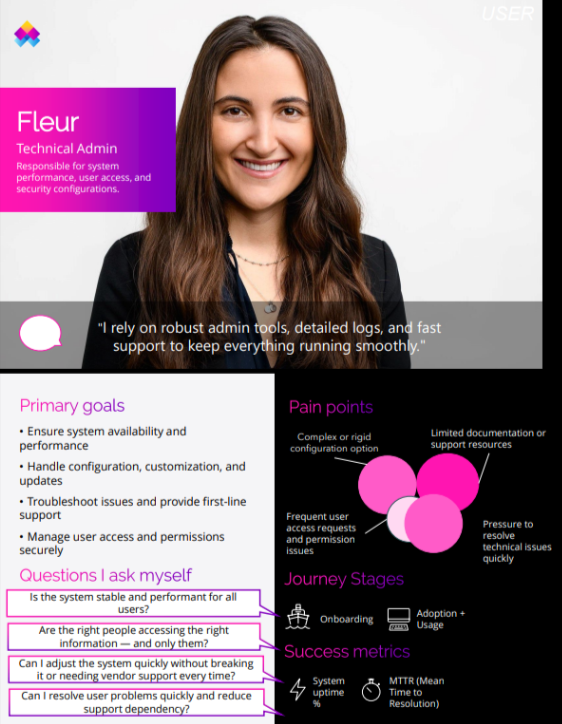
The map told people what happened and in what order. It still didn't tell them who any of it was happening to. Working with Axway Software, I helped develop personas from research and interviews, covering our most common customer types and splitting them into buyers and users.
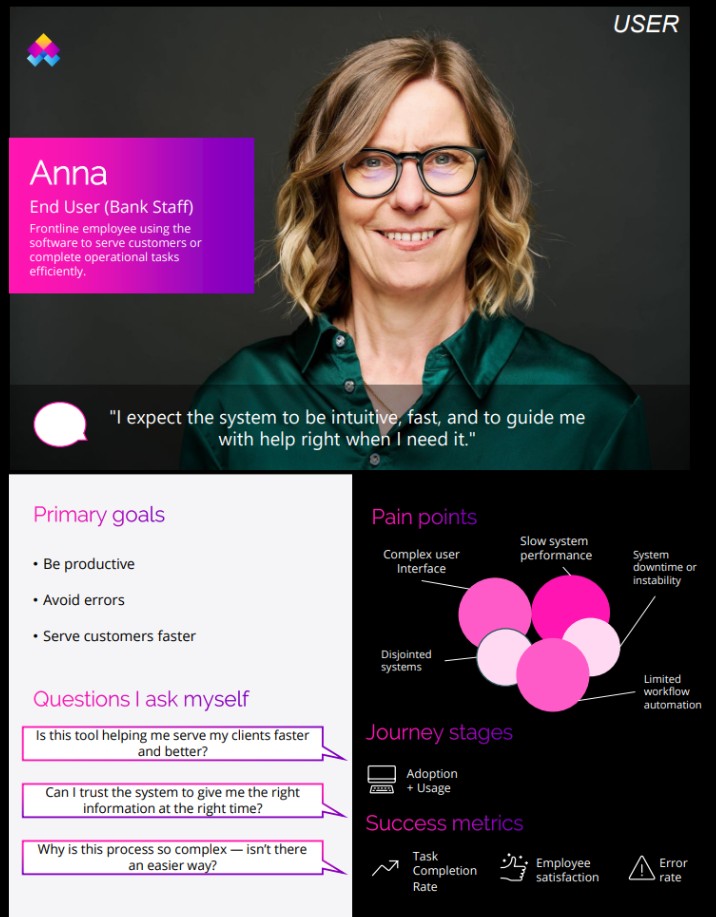
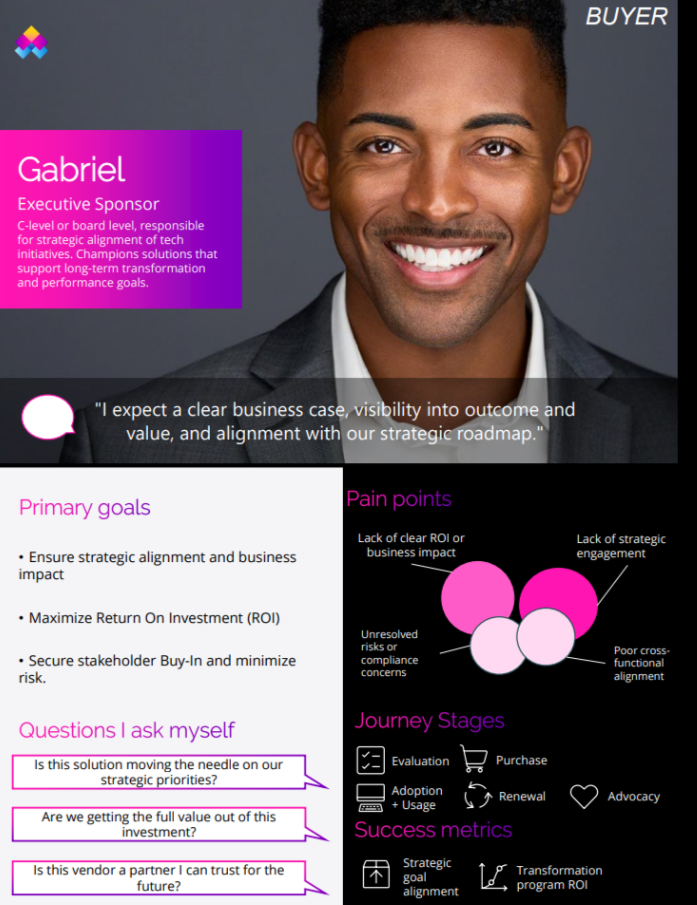
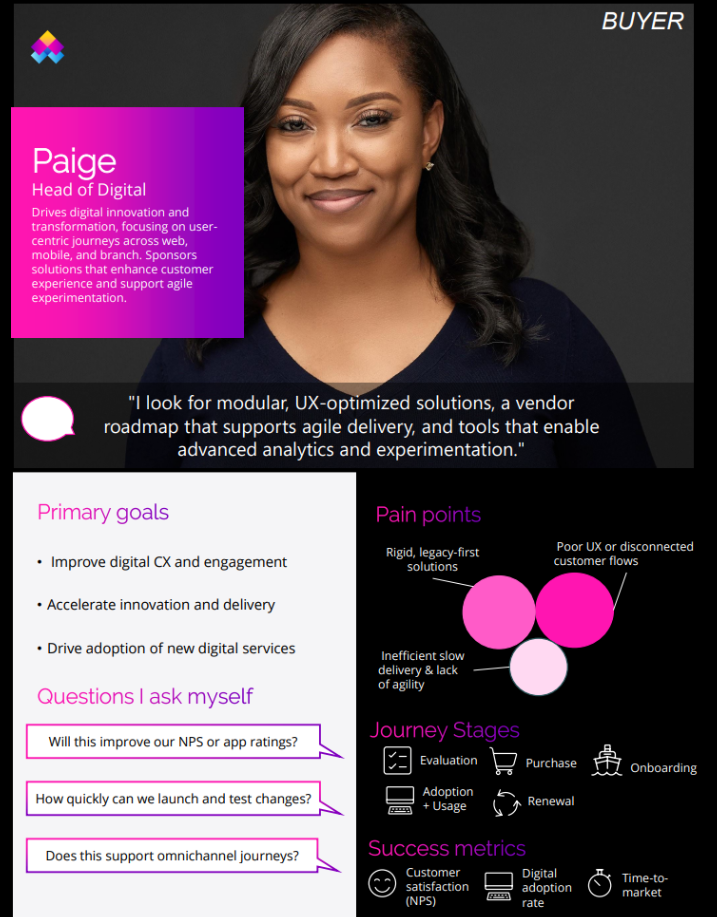
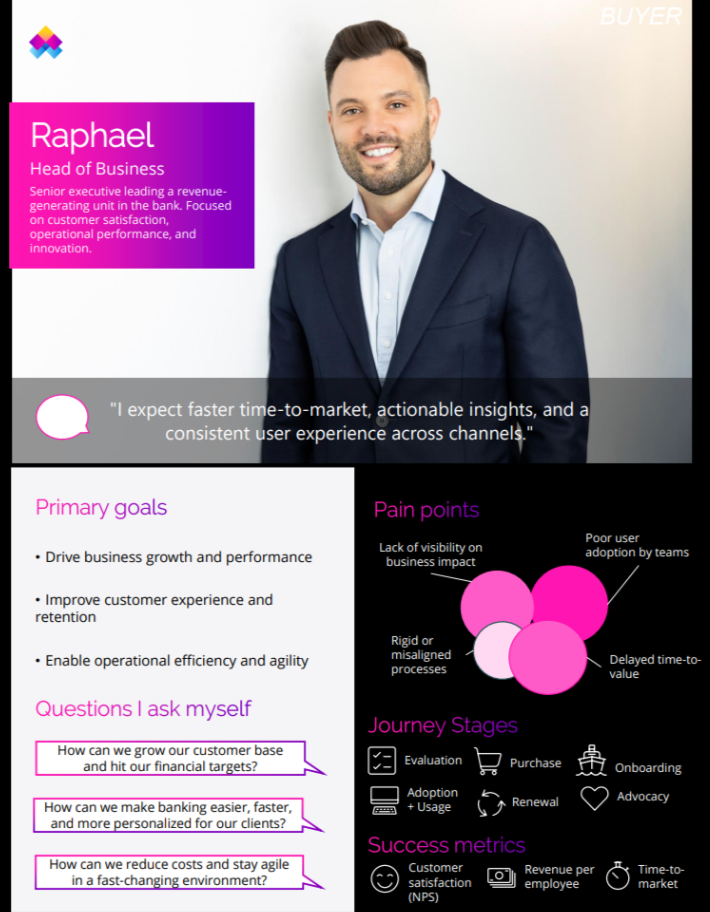
The part I hadn't planned for
The Customer Journey Map was a useful tool, but conversations with colleagues showed that many employees didn't know how to use it.
I designed and created an e-learning module to make the journey easier to understand and show employees how their role connects to the customer experience.
I designed this, however, it has yet to be rolled out as this task was handed over to someone else due to my high workload.
05
Changing
behaviour
Understanding customers is one thing,
but actually making them act on that understanding is something entirely different.
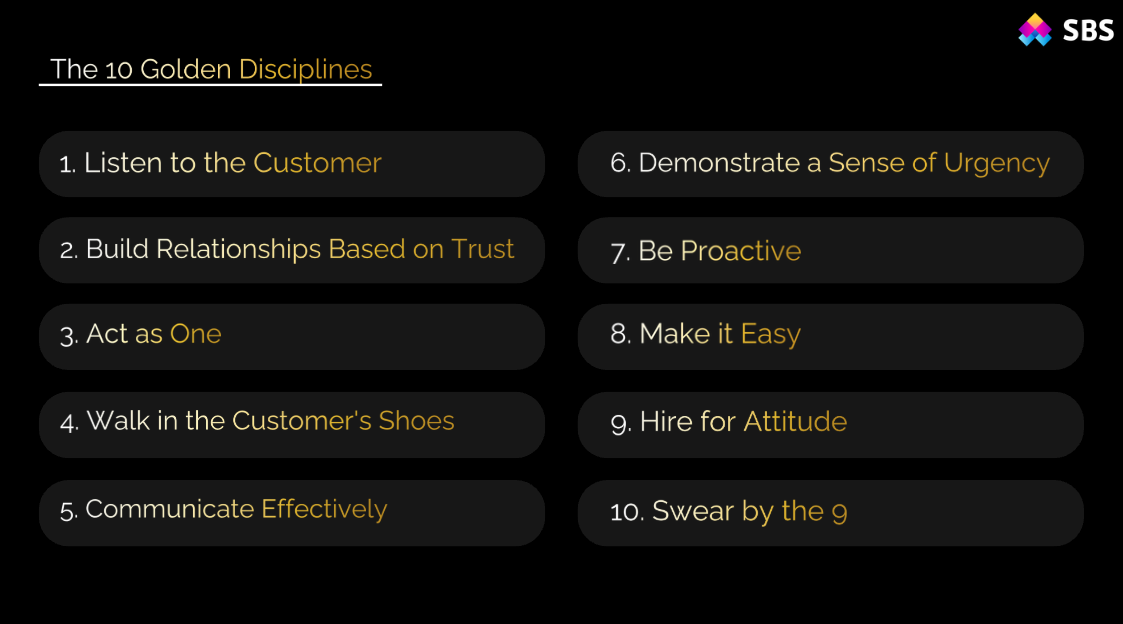
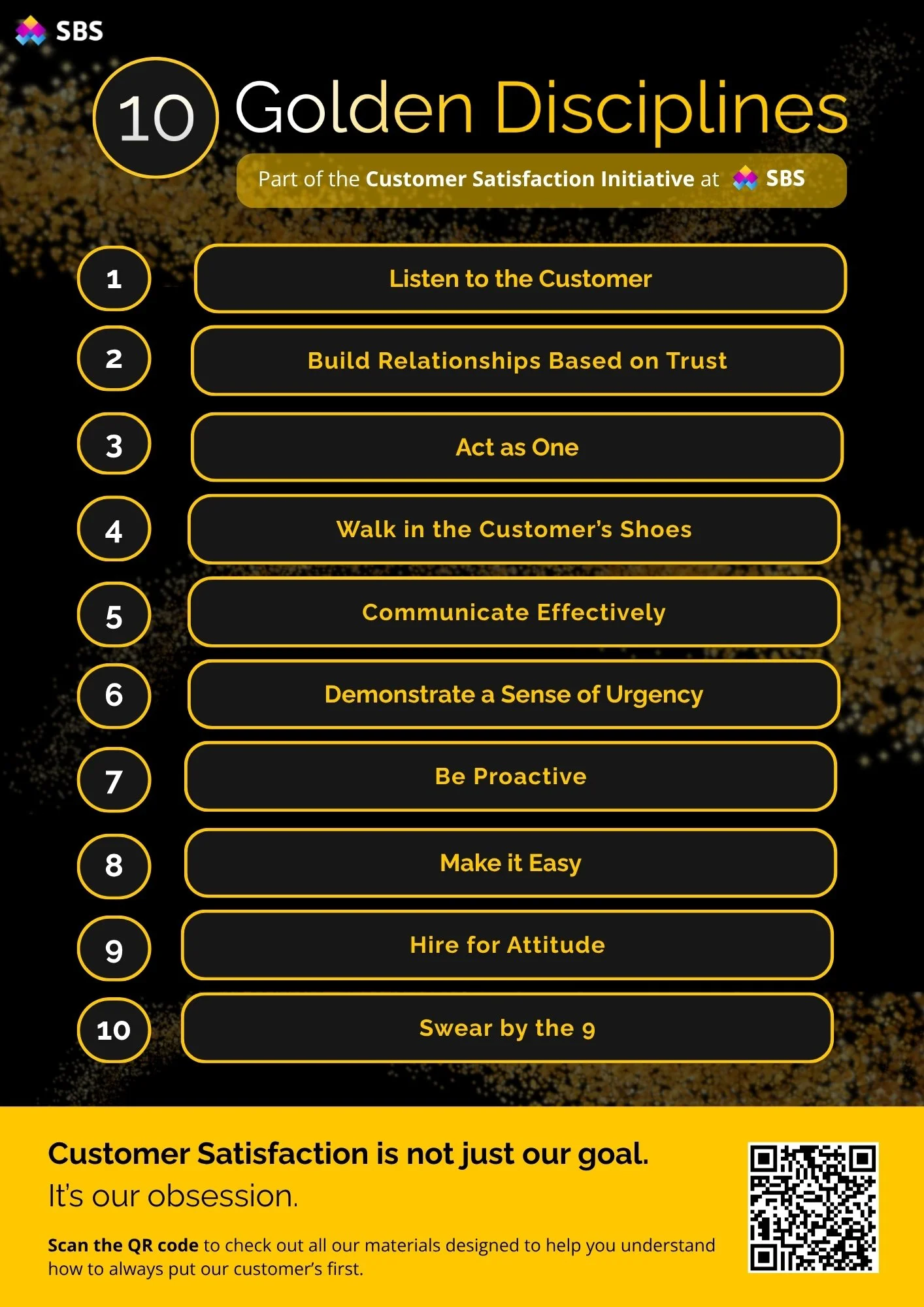
We used the 10 Golden Disciplines to turn customer-centricity into practical behaviours, developed with managers from across different product lines. The goal was for this to turn knowing into action.
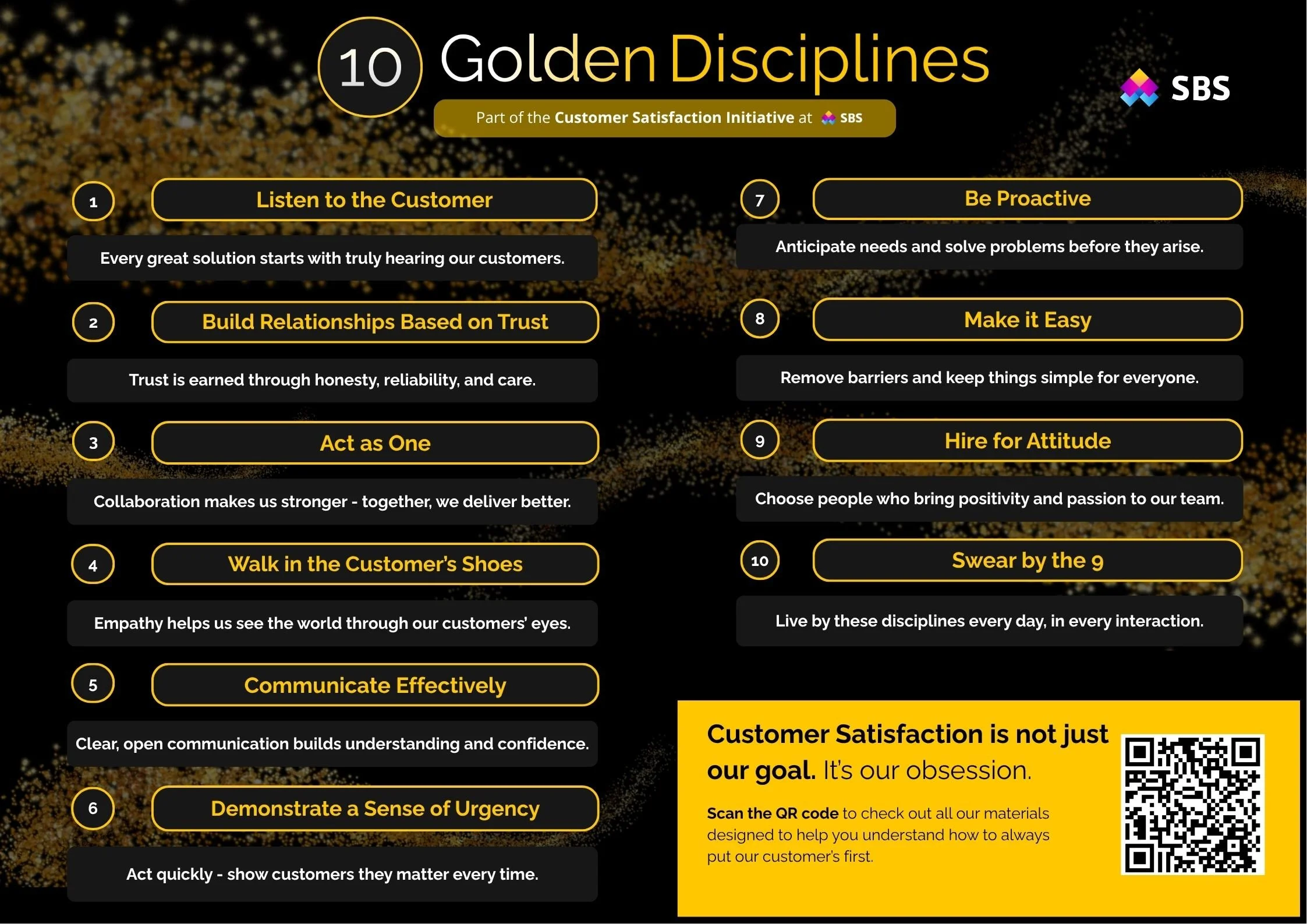
Ten E-learning modules
I created and delivered the 10 Golden Disciplines e-learning independently, designing it to make the principles engaging, easy to digest and practical for employees.
I used clear visual content, a humorous element and an accessible learning format to introduce each discipline, then show why it mattered to the customer experience.
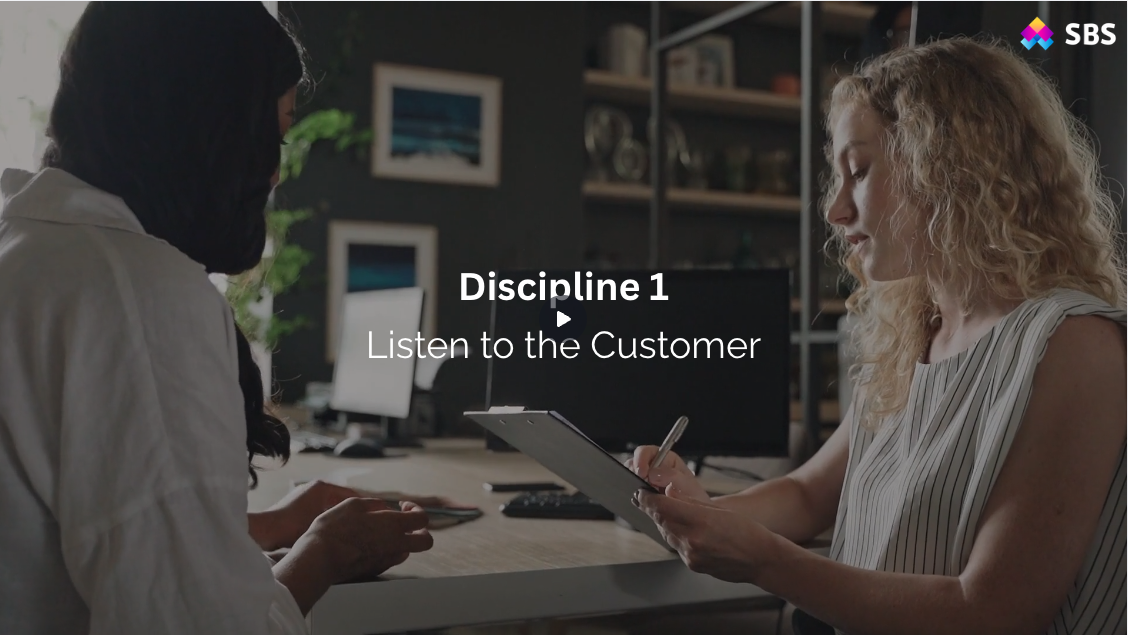
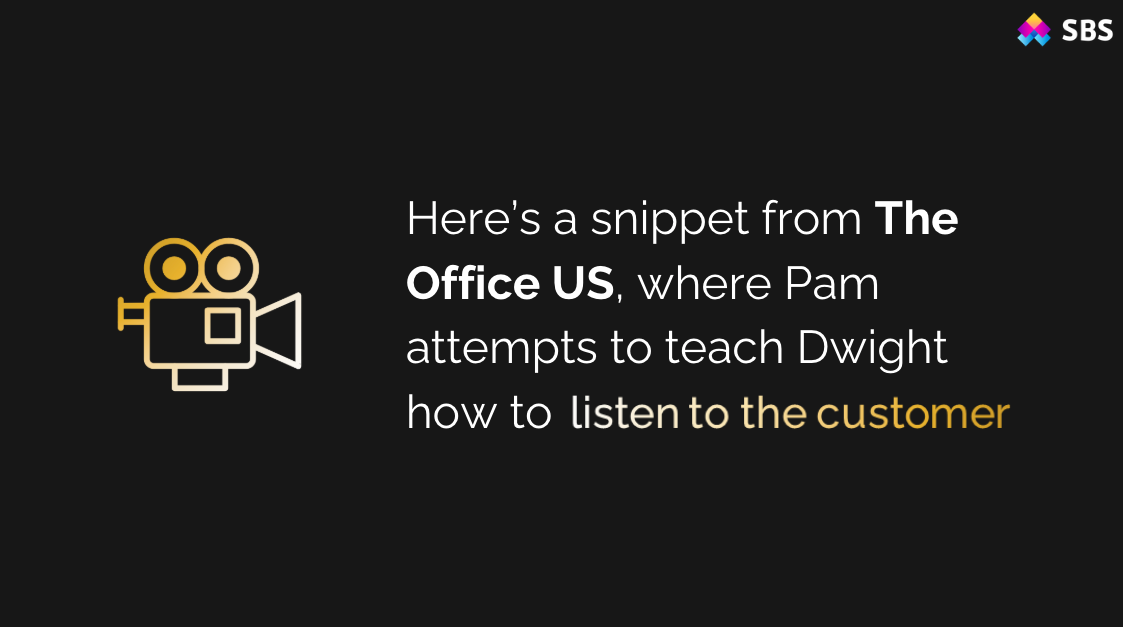
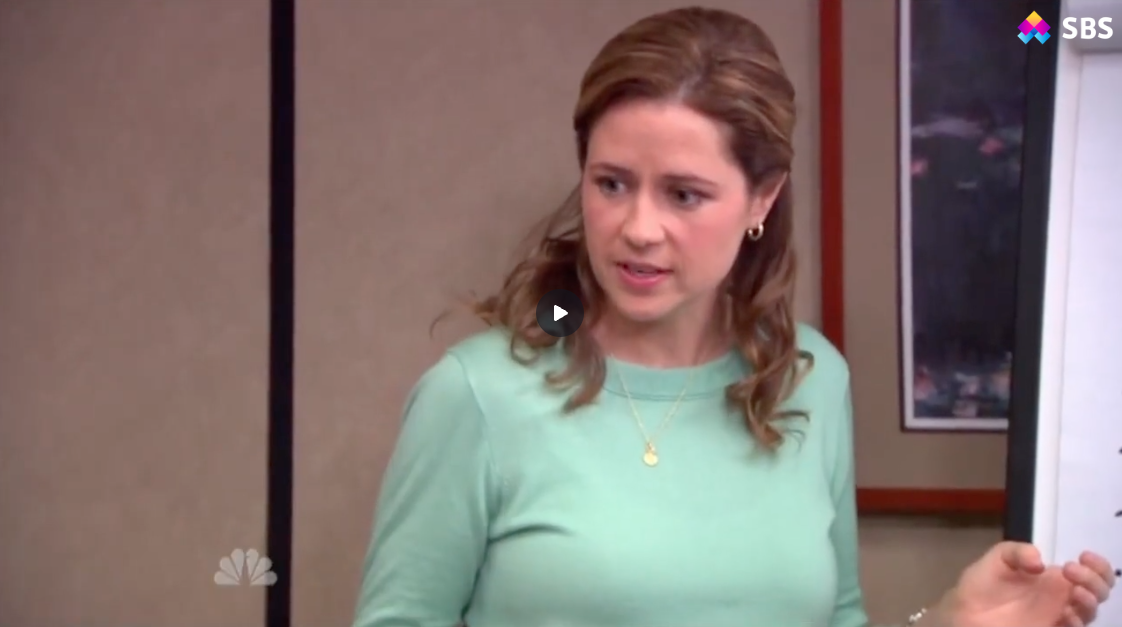
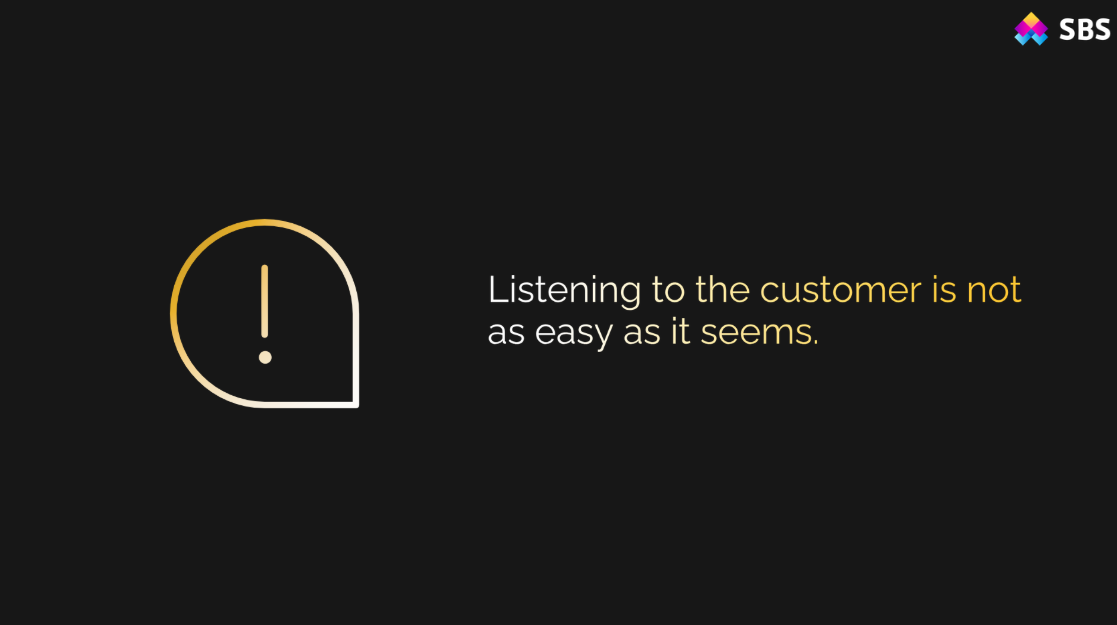
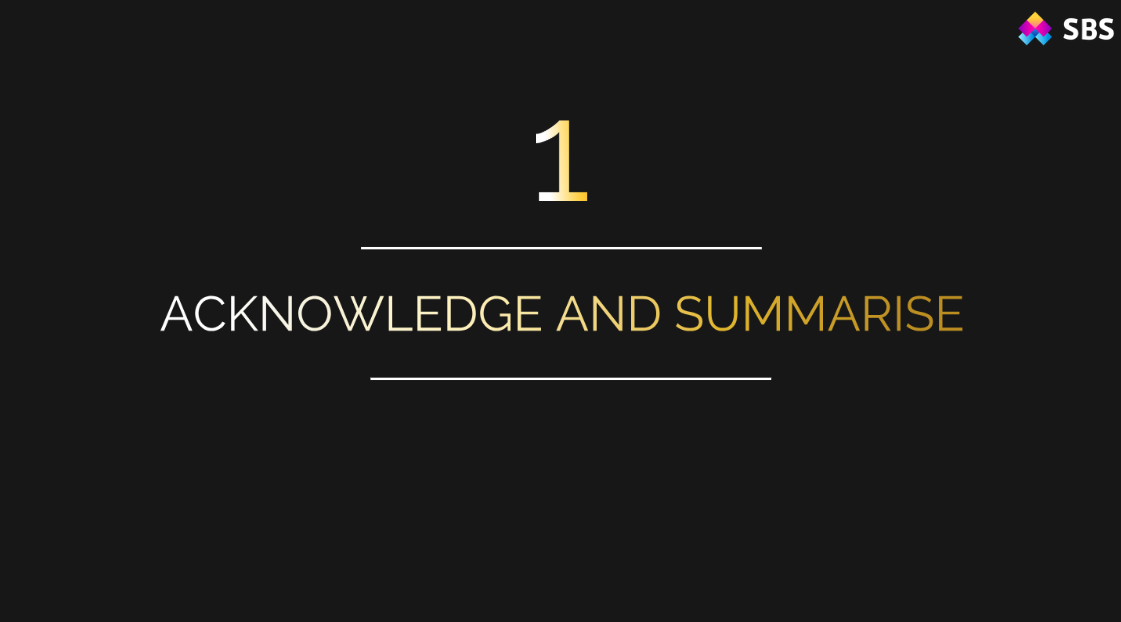
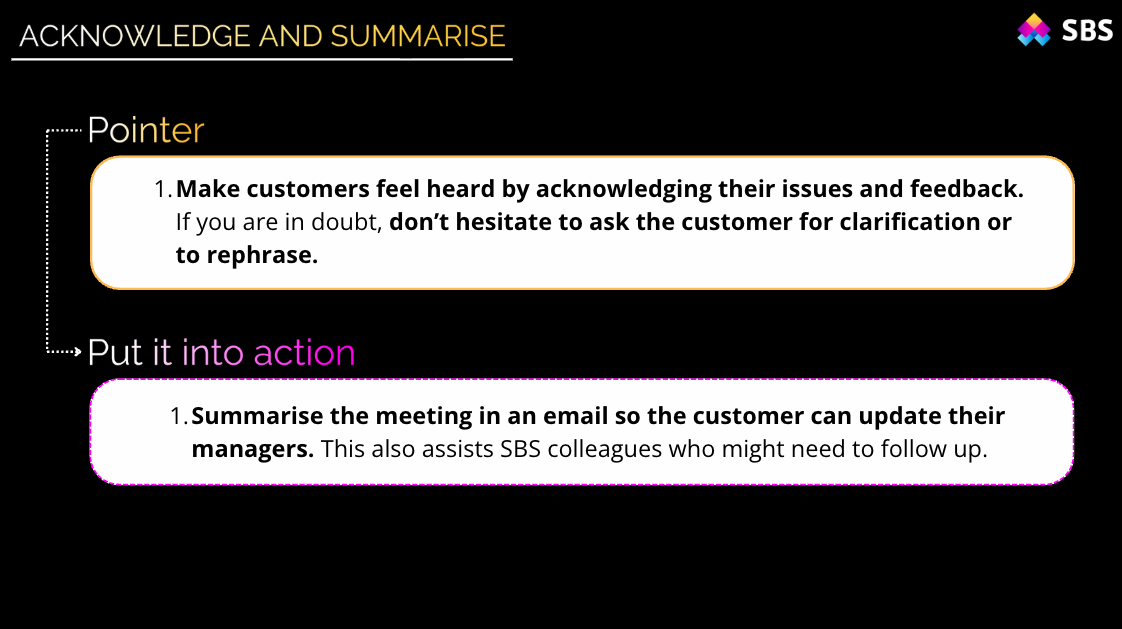
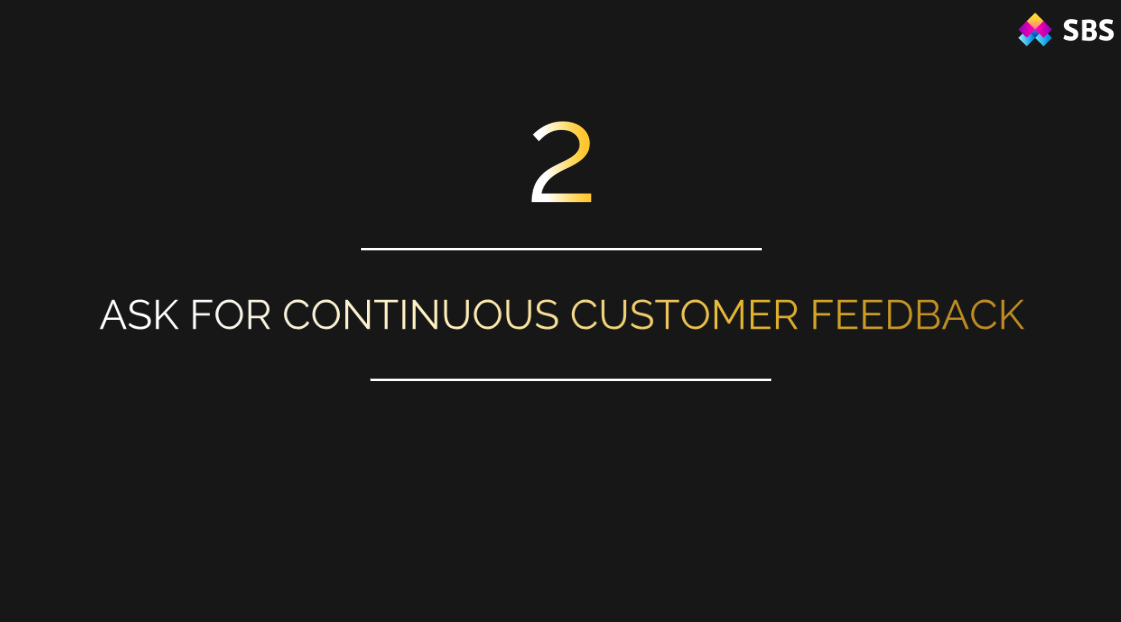
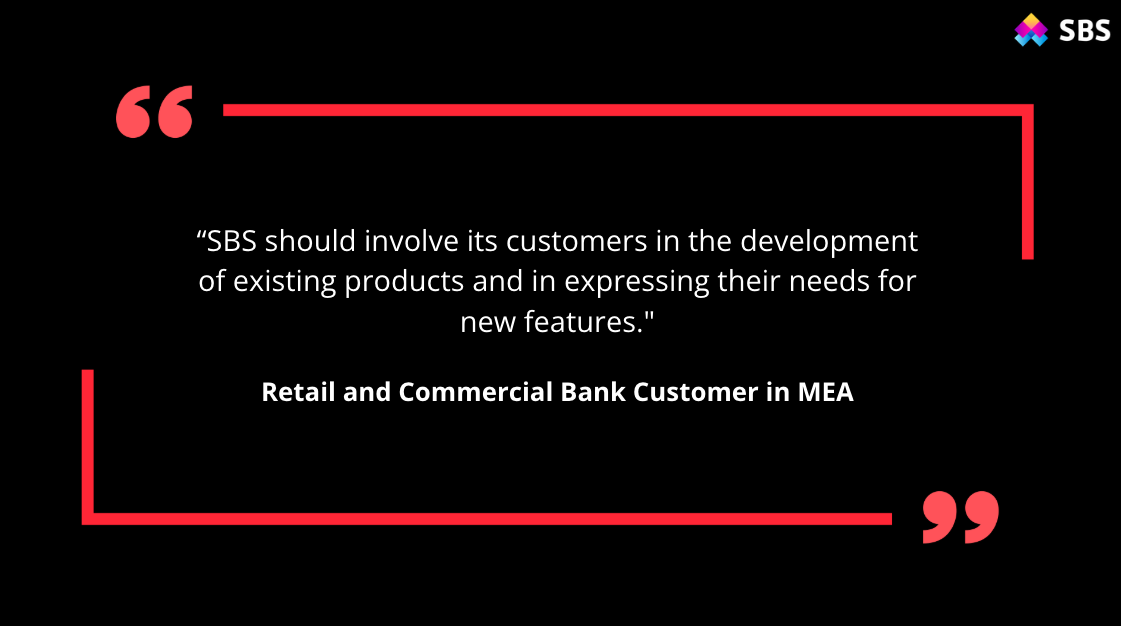
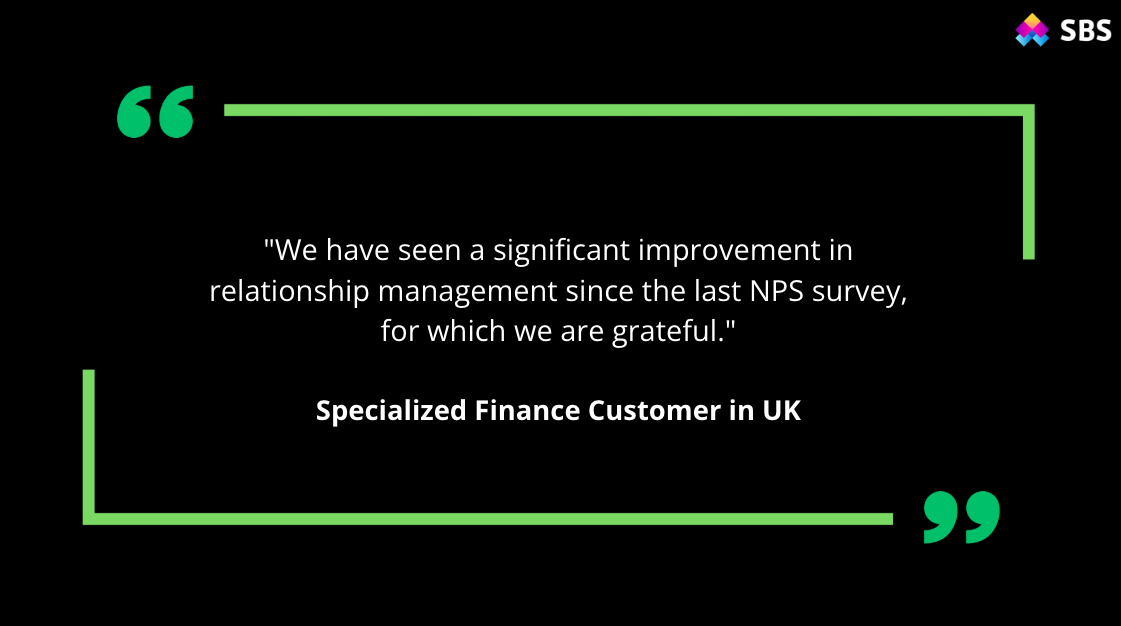
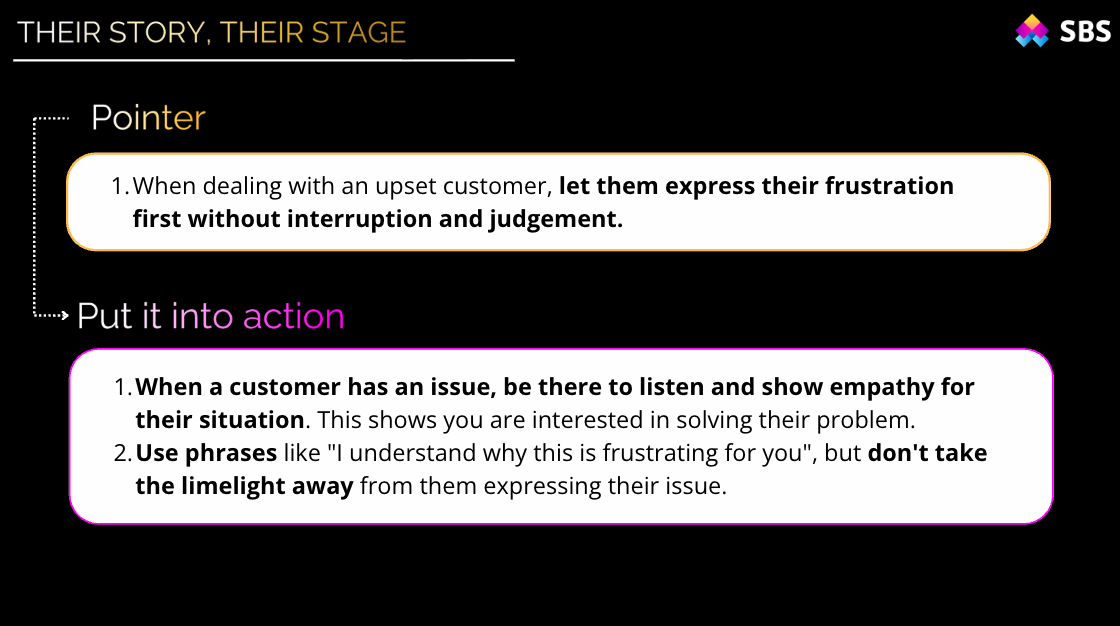
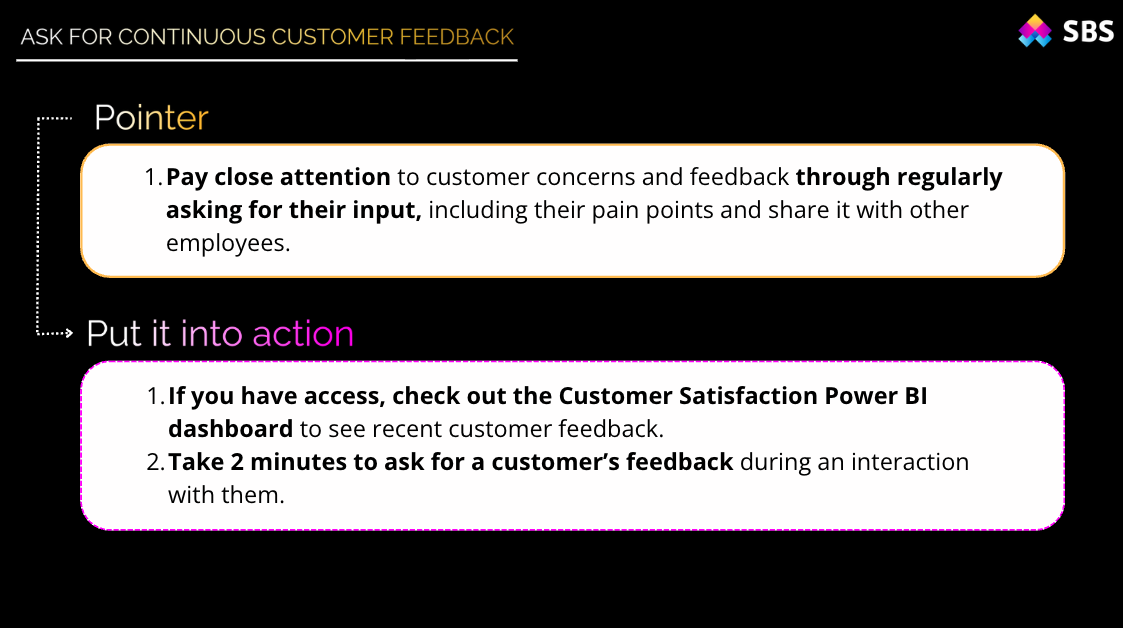
I also recorded a voiceover myself for each video, as eventhough the AI voice route would have been much less time consuming, I was pretty sure it would produce worse results. Below are screenshots from 1 video, and this flow was replicated in each. to show the flow of each video.
300+ workshops
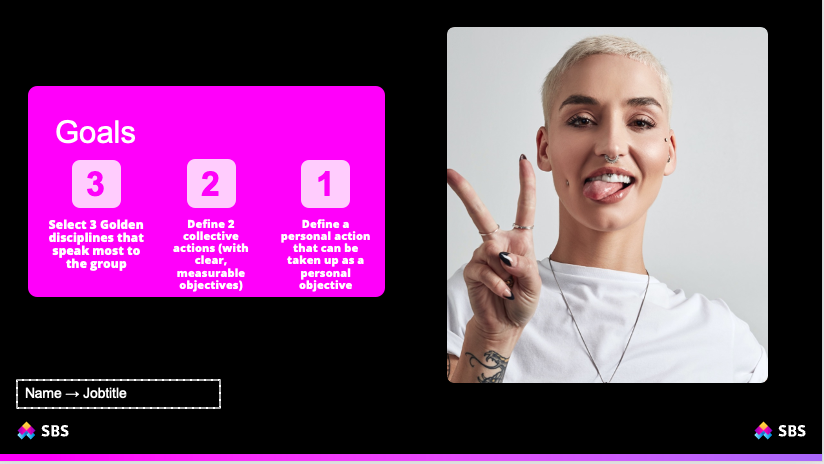
I facilitated around 25 remote 3 hour workshops across teams and departments. Each team picked the disciplines most relevant to their own work and turned them into SMART actions.
Due to confidentiality I can’t insert examples of SMART actions.
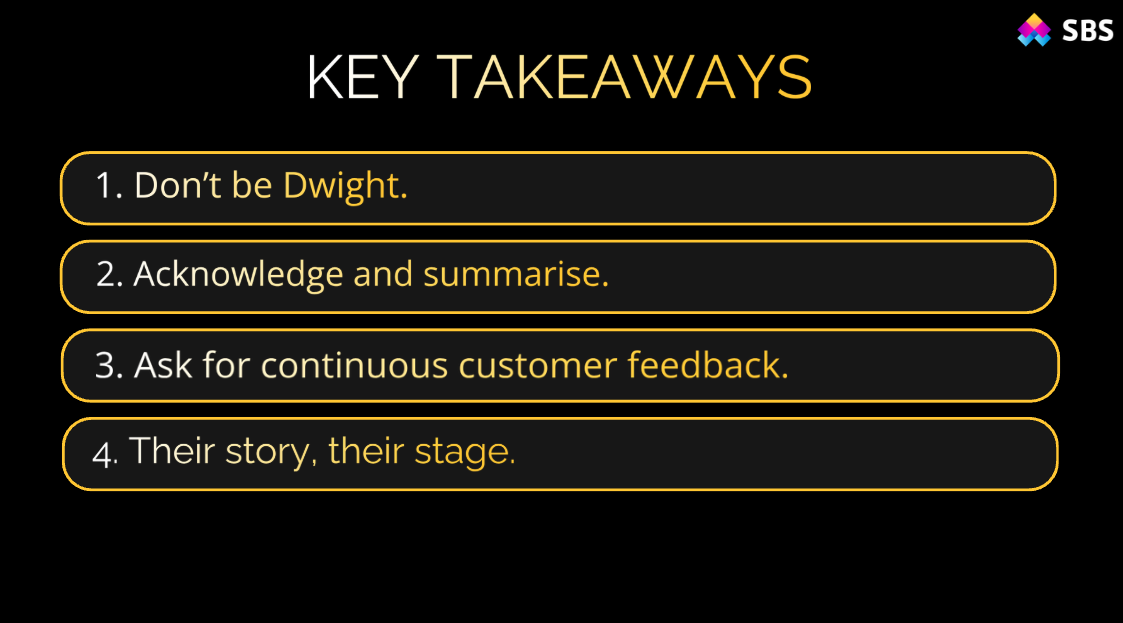
The image on the right shows a screenshot from the workshop presentation used, and shows the key workshop stages.
I didn’t design the workshops, and I noticed how attendees would lose concentration, and I had feedback that it was infantilising. So I adjusted elements, such as longer time for discussion, less listening and more action. This improved the feedback tremendously.
Then keeping it all visible
As teams finished the e-learning I designed posters for their offices, plus a short video for the reception screens, across all 50 locations.
Naturally, people forget if they’re not reminded, so these were the friendly reminders.
The workshop sessions averaged 4.8 out of 5. Several colleagues recorded video testimonials off their own back, which was not something I asked for and did make my week.
“The 10 Golden Disciplines are not just rules, it’s a mindset, we are motivated to make customer satisfaction not just a goal but a habit”.

Khalil Zineb
Operational Manager for Amplitude
“It’s been a powerful approach that has helped us stepback and improve how we work to deliver an even better service to our customers.”
Cedric Froger
Head of Customer Support
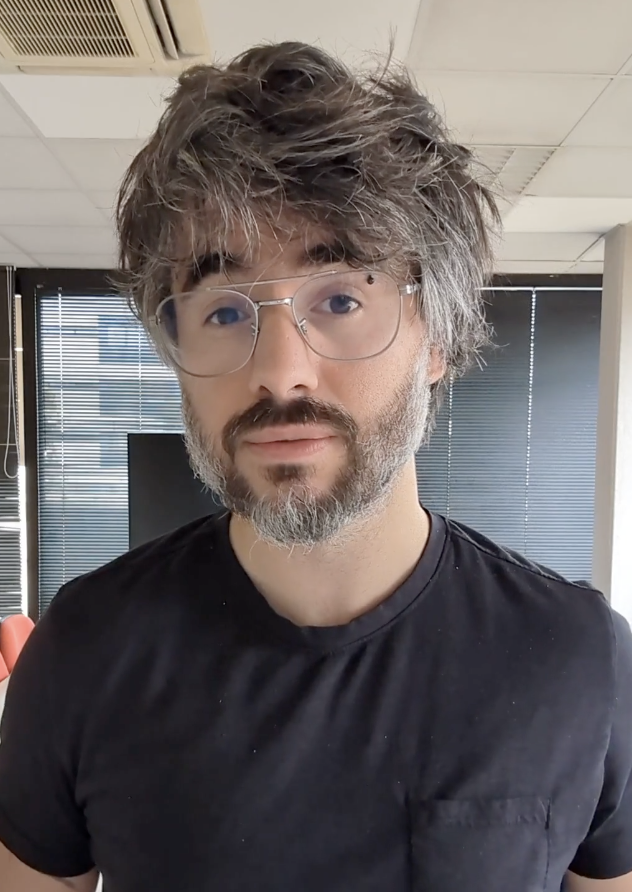
“As part of SBS Support, customer satisfaction is one of our main concerns which is why we truly believe in the initiative.”
Jonathan Salmon
SBS Support
06
Making it survive
a normal week
How do you keep customer satisfaction
visible everyday?
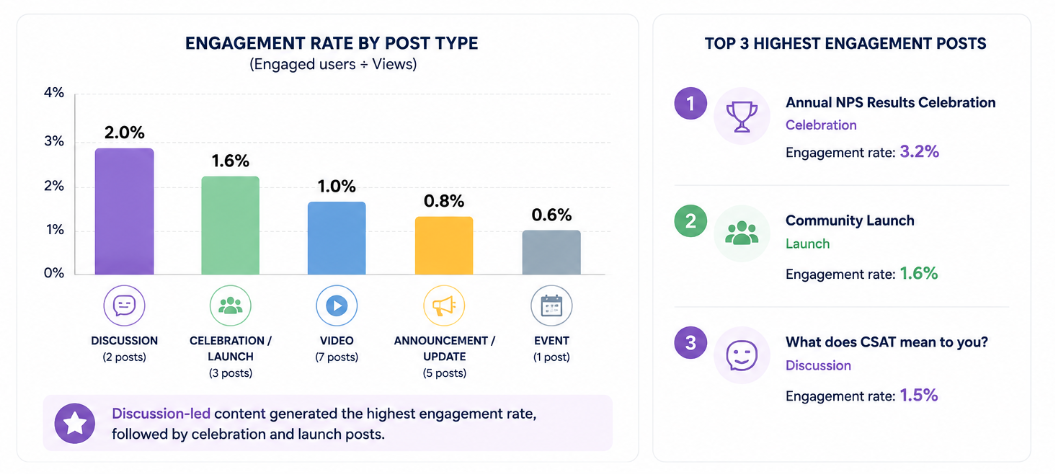
Great question. Well, currently Viva Engage was the only channel available to me, and it was saturated. Fewer than half of people opened posts at all, and average engagement was 0.85%.
I needed to find what people actually engage with
I wondered whether the content that people scrolled on other social media sites would work the same on a work related social media platform. Personally, I know I wouldn’t spend my free time scrolling through Viva Engage because I don’t relate the content with relaxation. However, it also lacked the novel and authentic content I enjoyed.
I tried to introduce these sorts of posts on Viva Engage, however, many were not approved as they didn’t comply with communication standards. I made 18 posts for the channel, which isn’t loads because the channel was already over saturated with posts not being read.
But, I did notice a trend toward posts which prompted discussion, or were praising an employee. Posts that were things like statistical reports, or survey results garnered very little engagement. This supported my theory that ‘human’ content was much more appealing that corporate statistical reports.
Sharing the Voice of Our Customers
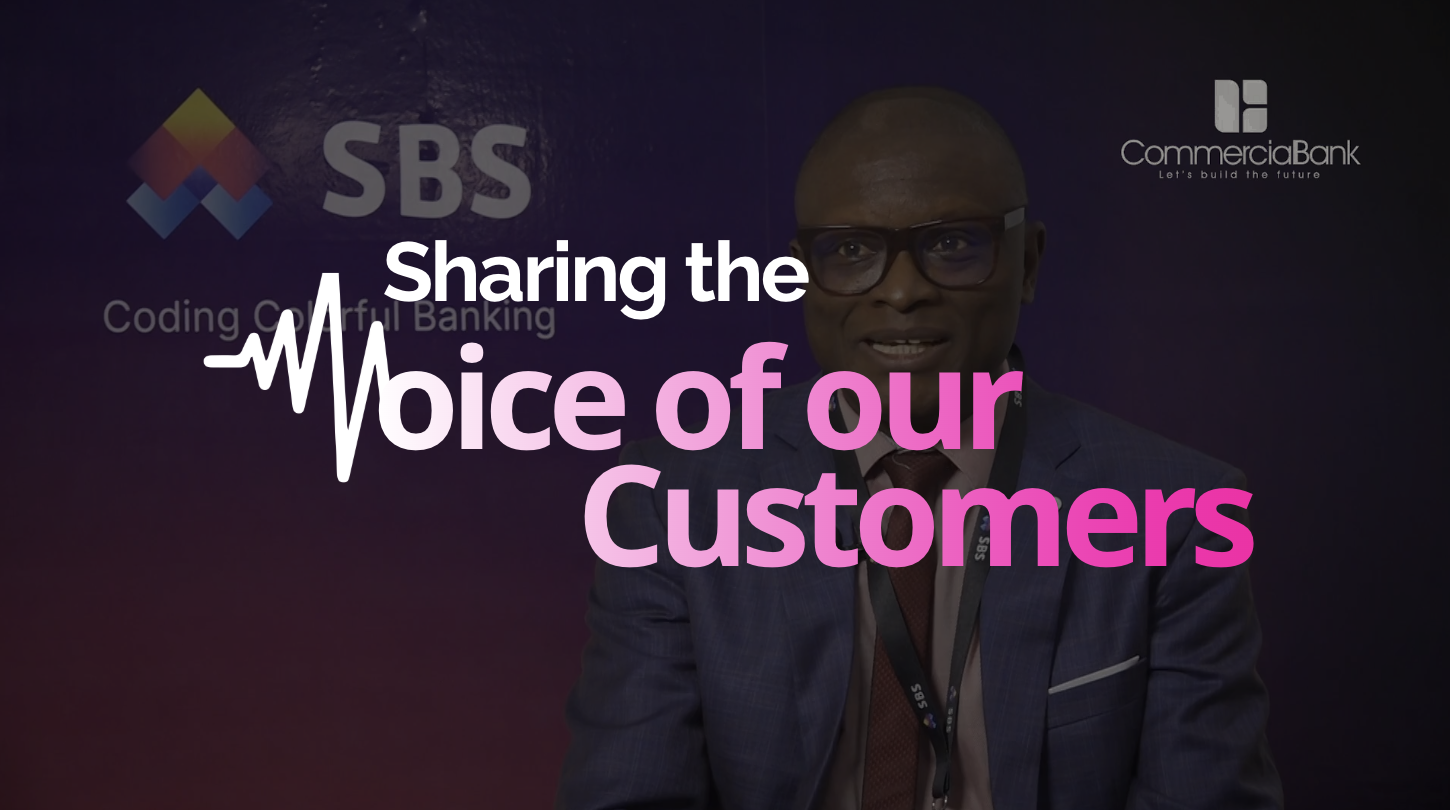
Customer interview videos filmed at SBS events and edited by me into short internal stories.
Disciplines in the Wild

I connected the 10 Golden Disciplines to current news and real-world examples, making the principles more relevant to employees' everyday lives.
Sharing the Voice of Our Colleagues
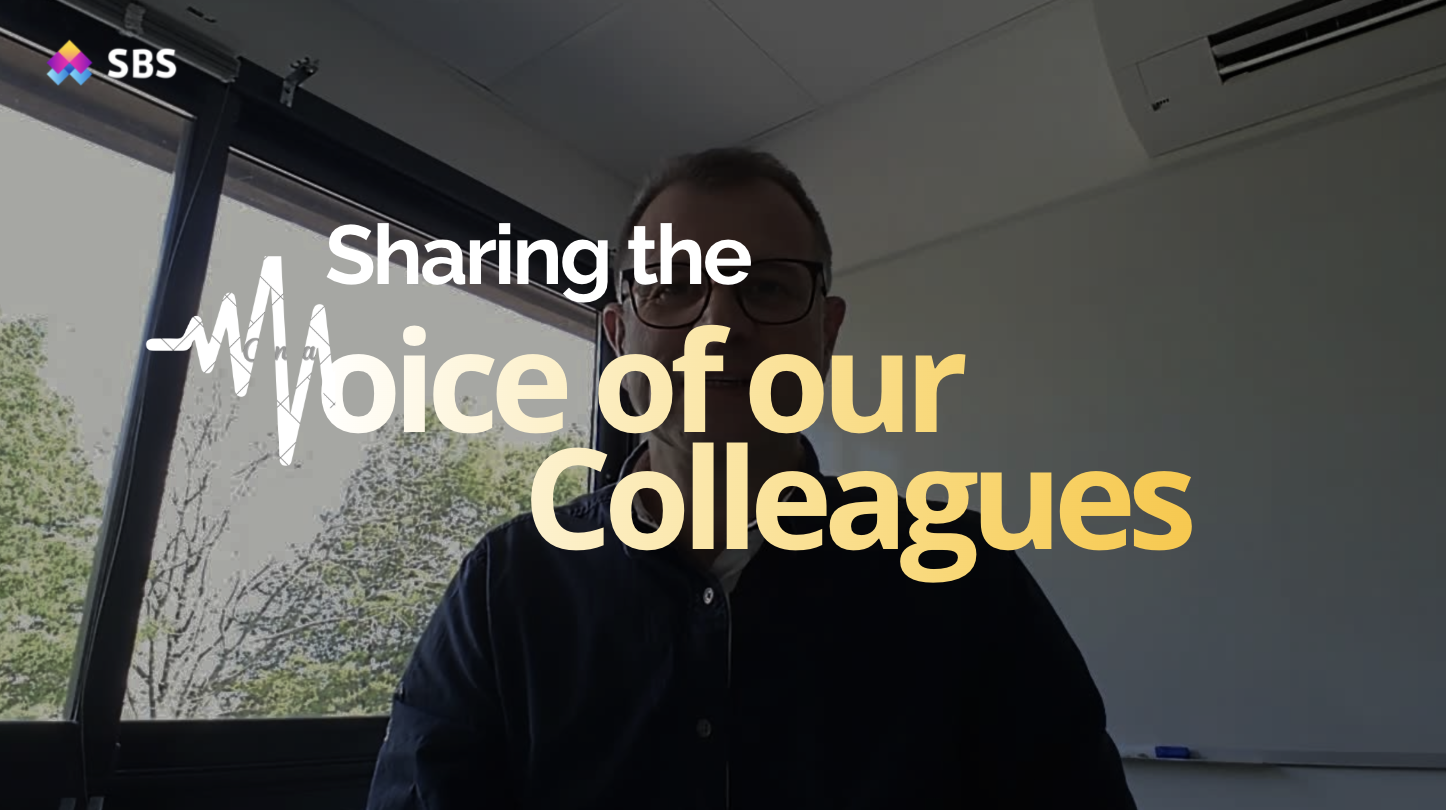
I created a Voice of Colleagues series, giving employees a platform to share their experiences and opinions on life at SBS.
A pitch that failed
From the beginning of my internship I always questioned whether moving beyond Viva Engage could be an option.
If we could access employees outside of work hours through channels they already used, surely this would only be a good thing?
SBS currently had no external communication channels other than Linkedin and the SBS website.
I spoke to external communications pretty regularly, and had an informal chat with the head who sadly said it wasn’t possible.
I think if I had stayed longer I could have got him to change his mind.
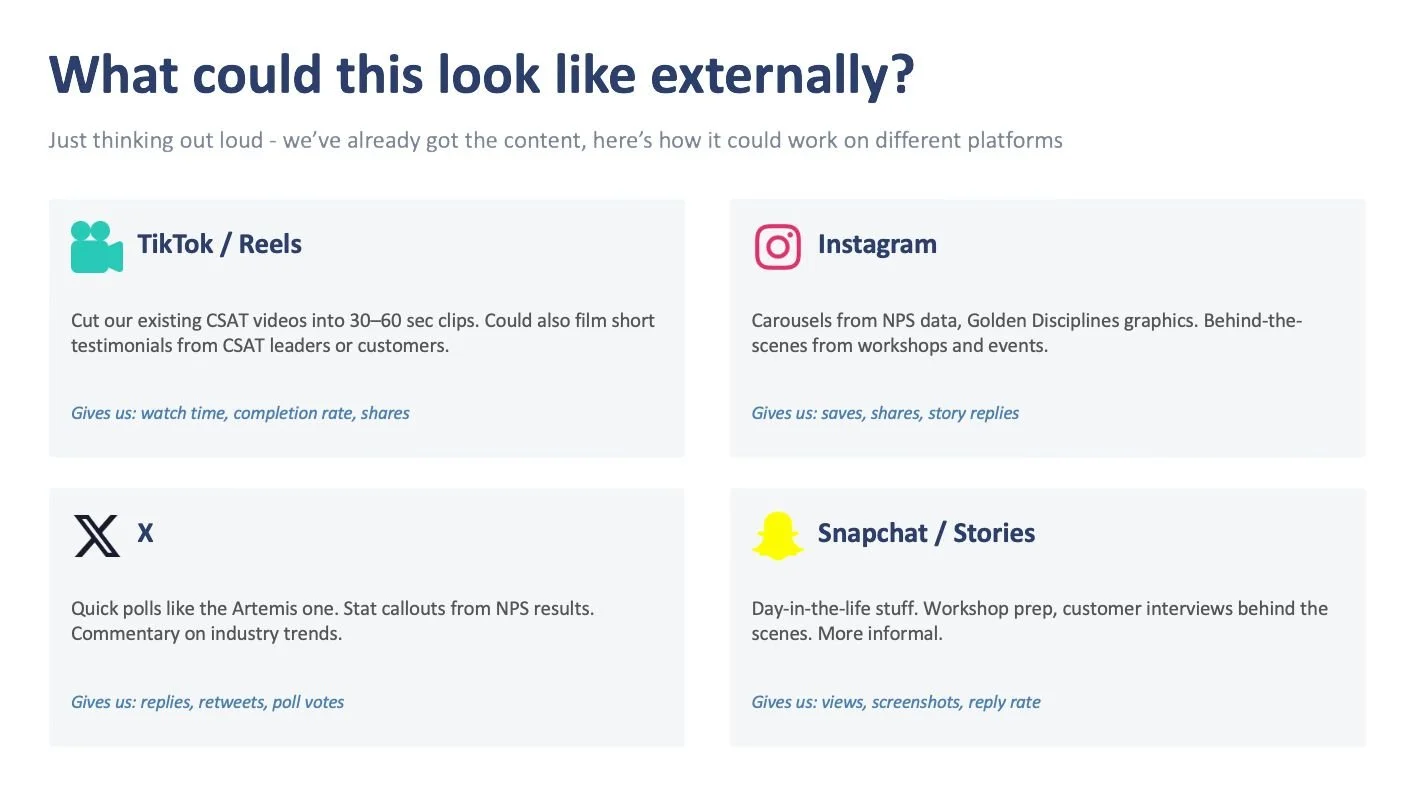
This slide shows the sort of thoughts running through my head.
07
Giving
Customer Satisfaction
a home
Where does customer satisfaction call home?
Posting on Viva Engage became a sorry sight, and that sight would disappear within the hour as posts from other communities take over. It was obvious we needed to give CSAT a home where anyone could access what they needed fast.
There was already a CSAT website (if you can call it that) - it lacked any navigation, with information stuffed onto one page. Anyone visiting it would surely get quite a large headache.
I have created websites during my masters and for a bakery site, so I was clawing at the chance to give it a well needed revamp.
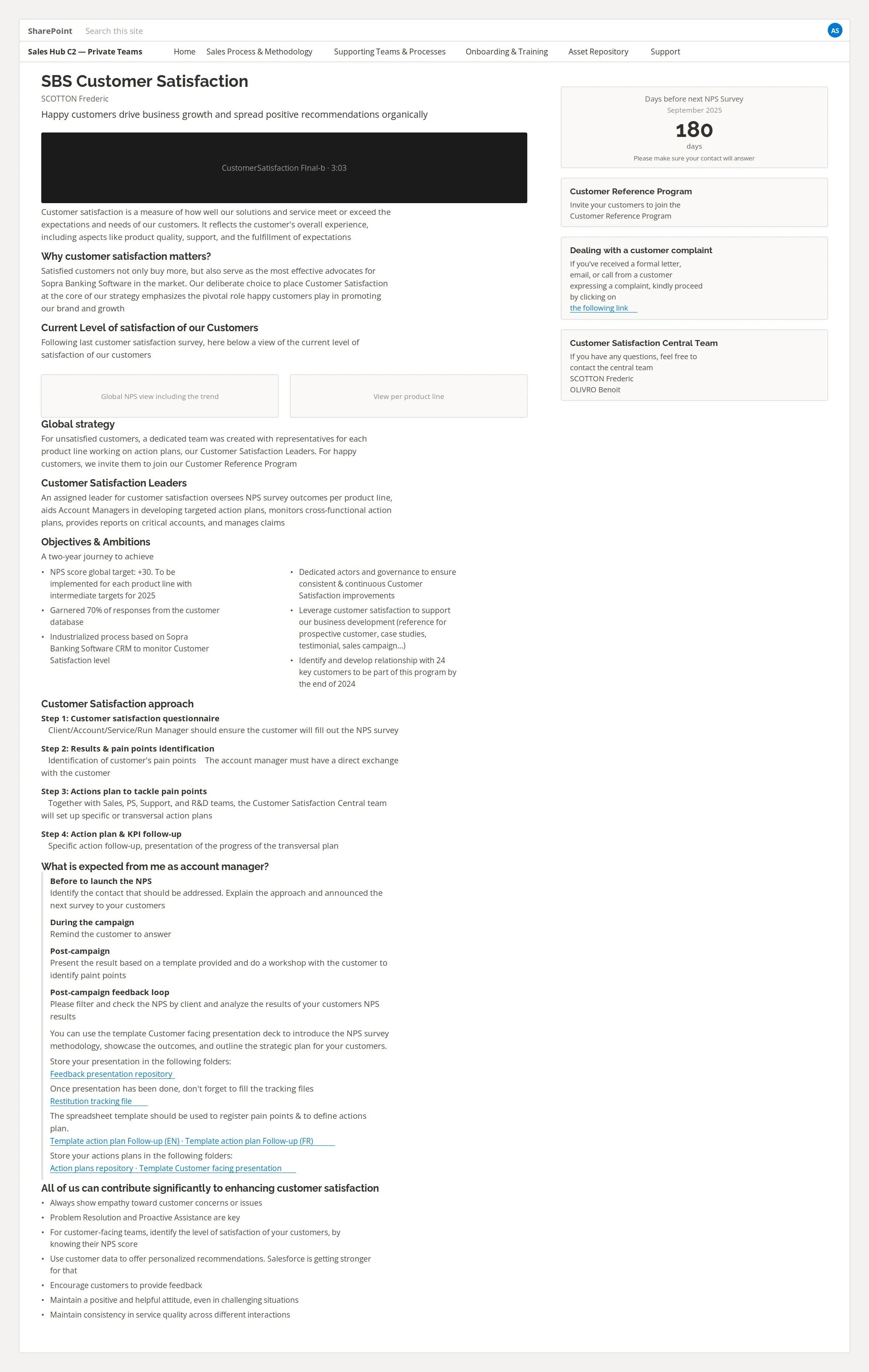
The old website
The screenshot is a mock up of the old website as it was deleted before I could save it. However, the copy and structure is the same.
Limited visual hierarchy
Multiple sections competed for attention, making it difficult for employees to identify where to start or which content was most relevant to them.
Poor accessibility
Difficult for screen reader users to find links buried in text.
Dense, text-led experience
Key information was presented as long sections of copy, making the page difficult to scan and understand at a glance.
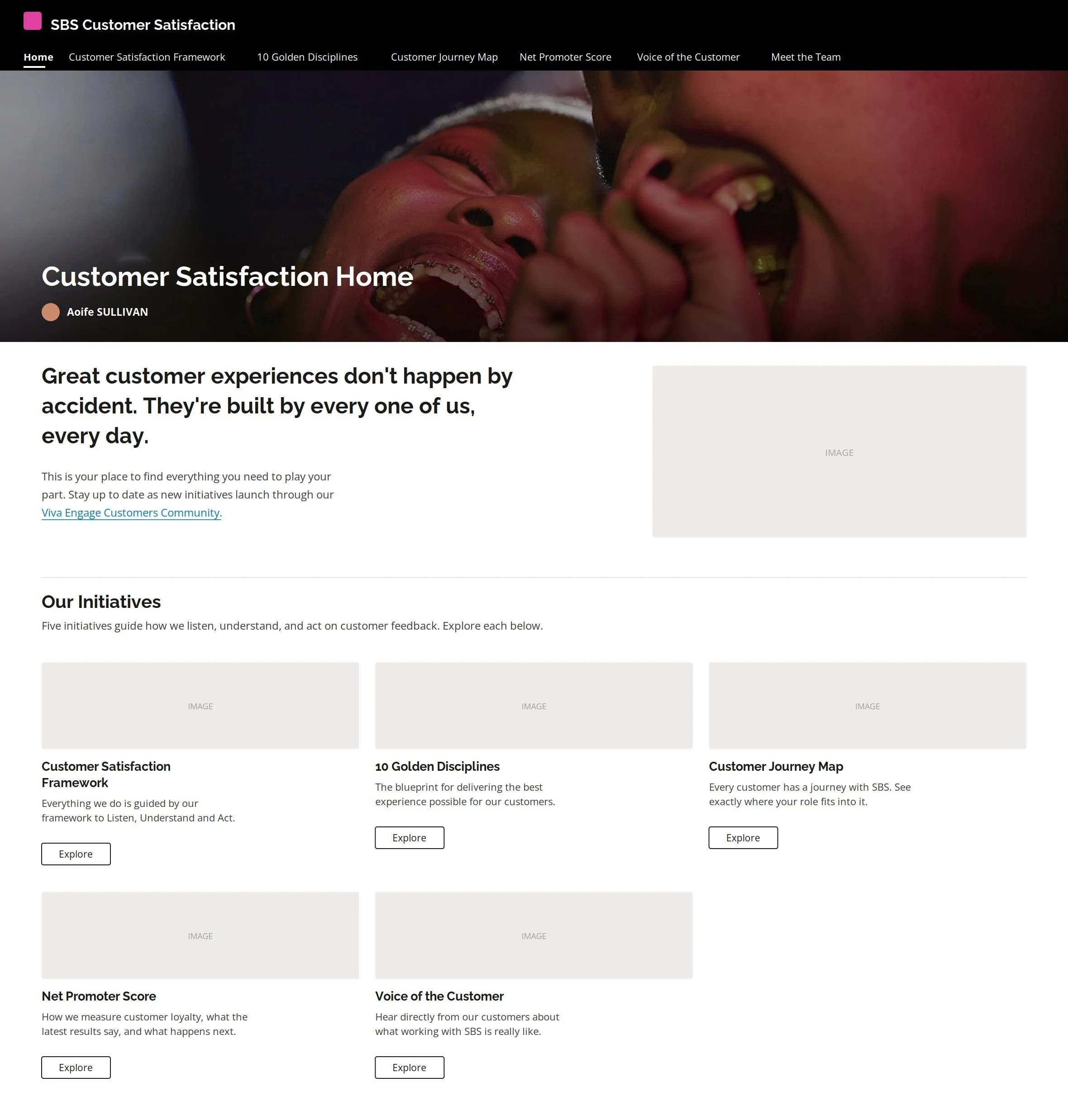
Clearer value proposition
A concise opening statement communicates the purpose of Customer Satisfaction immediately, before directing users into the wider experience.
Stronger information hierarchy
A clear progression from purpose → context → initiatives gives the homepage a more intuitive reading and navigation flow.
Consistent calls to action
Each initiative follows the same card structure and "Explore" CTA, creating predictable navigation and making the available pathways immediately recognisable.
The new website
The Voice of the Customer page has been screenshot straight from the website. The homepage is a mock up, as this was inaccessible at the time.
How I changed the copy
The old website used copy which lacked authenticity, was process driven and lacked understanding of why the user was visiting the site. The new copy fixed this.
Before
Customer satisfaction is a measure of how well our solutions and service meet or exceed the expectations and needs of our customers.
Before
What is expected from me as an account manager?
After
Great customer experiences don't happen by accident. They're built by every one of us, every day.
After
This is your place to find everything you need to play your part.
Little visual storytelling
The experience relied heavily on text, with limited use of imagery, video or interactive content to bring the customer experience to life.
Limited signposting
Related resources were surfaced alongside the main content, but there was no clear journey guiding users towards the most important customer-satisfaction resources.
Content grouped by user need
Related information is organised into five clear initiatives, reducing cognitive load and making it easier for employees to find what they need.
From information page to content hub
The homepage now acts as a clear entry point into the Customer Satisfaction ecosystem, giving each initiative a distinct destination.
Improved findabilty
The primary navigation bar makes it easy for users to find what they are looking for.
Purpose-led introduction
The page immediately explains why customer voices matter, giving users context before asking them to engage with the content.
A repeatable content framework
The three-question format creates a consistent structure for future customer stories, making the initiative easier to scale while giving employees a familiar experience.
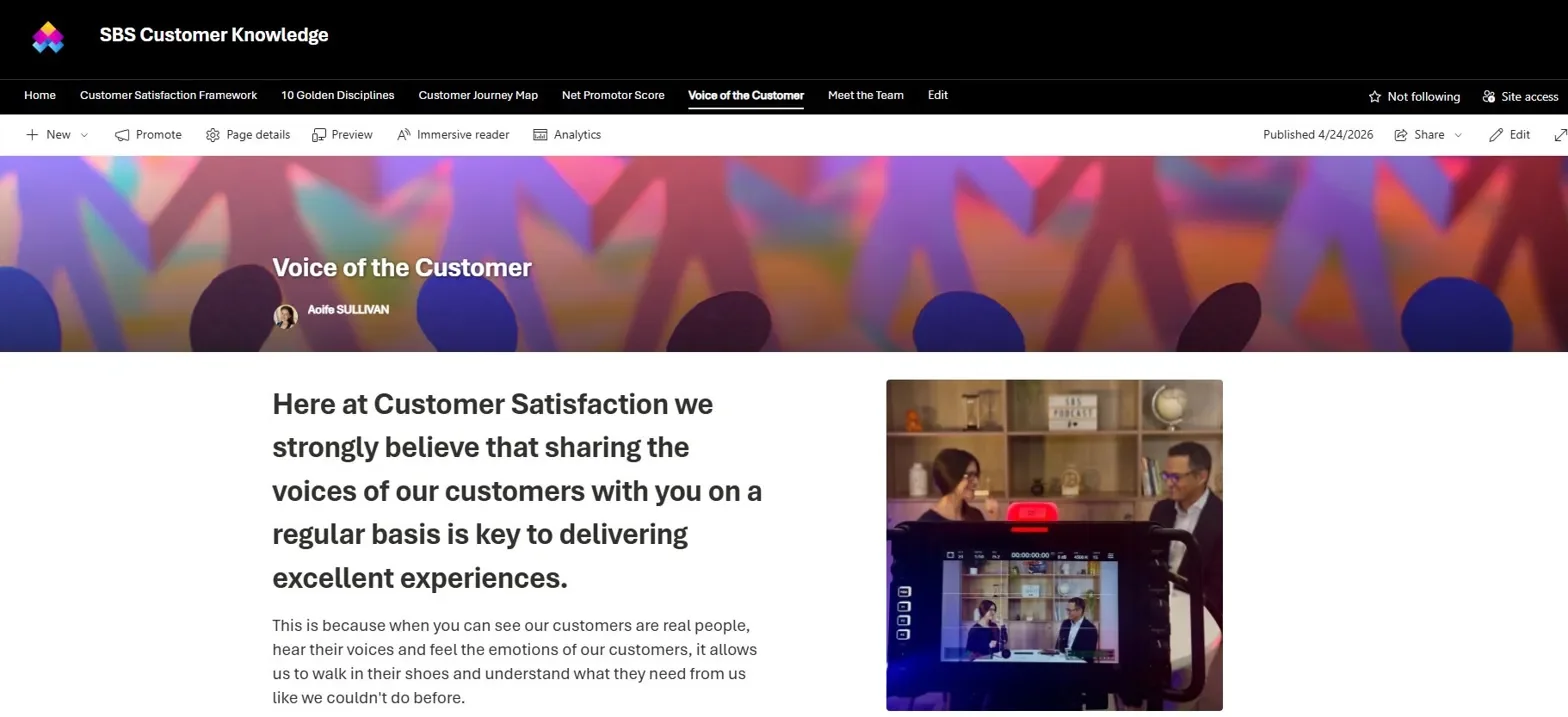
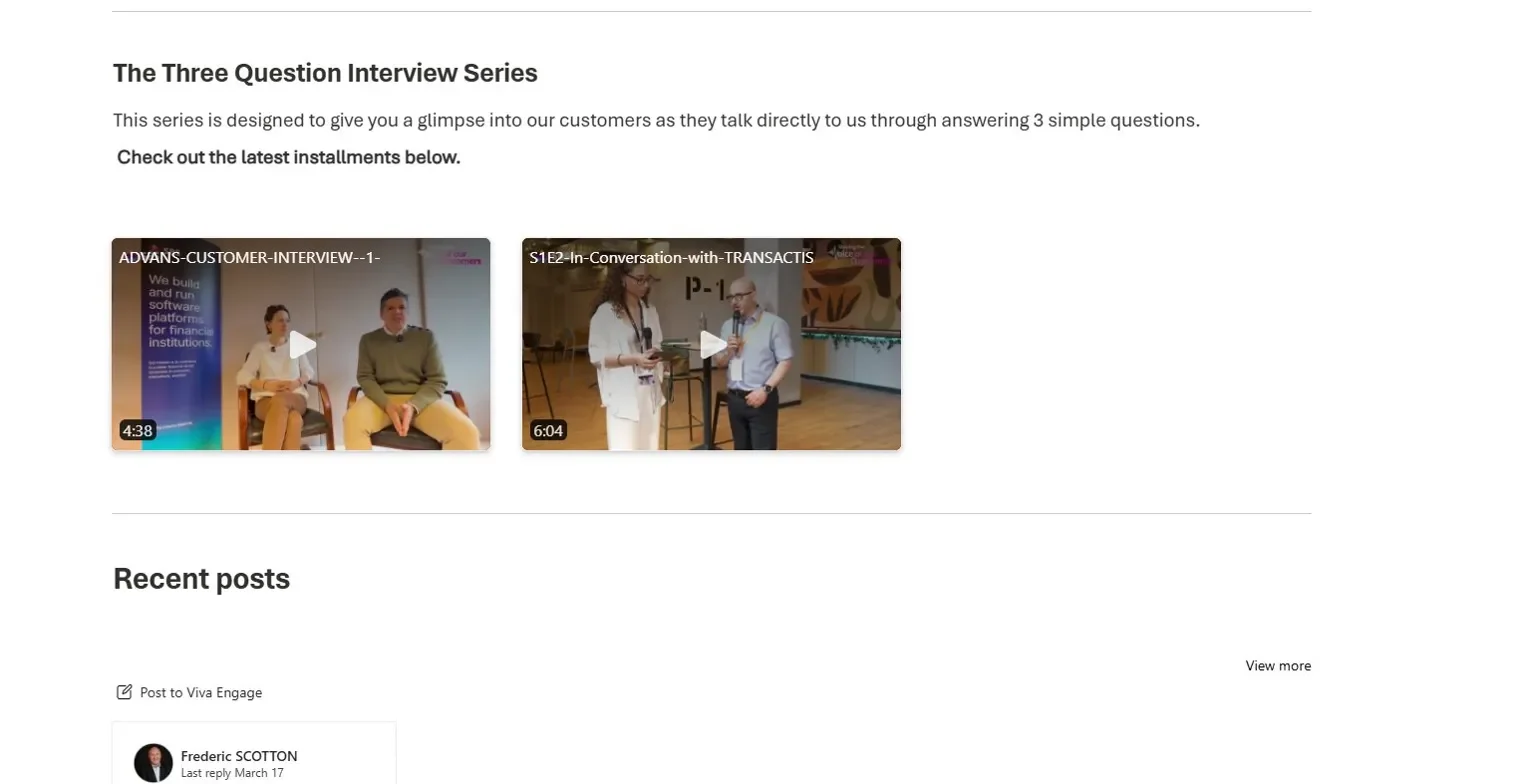
Customers become people, not data
Video and imagery make customer feedback more tangible and emotional, helping employees connect with the people behind the feedback.
Designed for scanning
Clear headings, whitespace and distinct content sections make the page easier to navigate and digest than the previous text-heavy experience.
Designed for ongoing engagement
Recent posts create a living destination for customer insight rather than a static information page.
08
Measuring
Impact
How did I know if it was working?
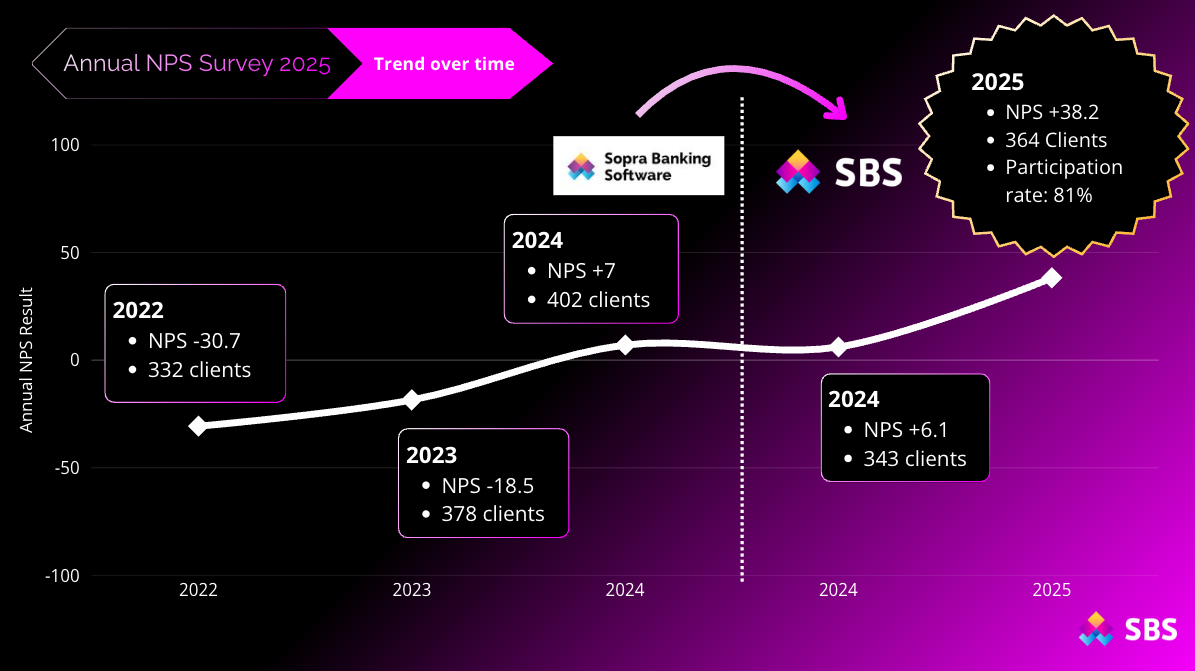
+38.2
2025 annual NPS, from +7
81%
Survey participation
8.1%
Average customer score
These were the results from the Annual NPS Survey. These results were way beyond what we were expecting, and although I can’t account it all to Customer Satisfaction without a statistical analysis, it certainly hasn’t done any harm!
Our target for 2025 was NPS +25, so that’s 13.2 beyond what we wanted and the highest increase we’ve had since we started recording the NPS.
What I can claim responsibility for vs. what I can’t
What I can claim
The qualitative feedback from employees was incredibly positive, and from conversations with colleagues they expressed gratitude at the attention being given to this topic. Many said they didn’t know what the NPS was before this year, and now they know about it they have a quantifiable figure they can aim to change. Employees also said that they appreciated the attention their feedback received in relation to the customer, as this is easy to ignore and give all focus to the customer feedback only.
What I can’t claim
Without a statistical test of causation, I can’t claim that CSAT is the sole driver of the increase. Yes, it’s a large coincidence, but other things can happen in a year too. Also the client base decreased, and these could have been unhappy customers - This would then increase our NPS.
09
Reflection
It’s time for some self reflection
What went well?
Starting with the obvious one, the NPS rose sharply over the same period
Listen, Understand and Act got approved and then used for the rest of my time there, so it outlasted me
I challenged the strategy in my first few weeks and got given the room to go away and rewrite it, which I really wasn't expecting as an intern
The 10 Golden Disciplines were built with managers from across the product lines, so people outside my team already felt some ownership of them before they launched
We got colleagues involved in a program and they actually responded to it pretty well
We got people thinking about the people they were serving which can be easily forgotten when your role isn't customer facing
When workshop engagement started dipping I changed the sessions while they were still running, rather than finishing the lot and writing it up as a learning afterwards
I got to transform a pretty poor website into something which was a lot more pleasing on the eye, and was way easier to navigate
I got to develop my skills in graphic design, video creation and software like Adobe premiere pro and Canva pro
Banking and finance was entirely new to me, and at first it was pretty daunting but I got the hang of the lingo pretty quickly. It was super interesting to be exposed to an environment I've never worked in before.
Even though I was a one woman team, I got to communicate with people from all around the globe. I was exposed to different cultures, and it was a strong reminder that you are designing content which has to cross borders well.
I really felt like I made CSAT become something which won't be forgotten about any time soon, from the e-learning and workshops to the visual reminders from posters and videos in every office. I hope that what I did here at SBS continues to prosper into the future.
What could have been better?
I love to follow a UX process, and this just wasn’t an easy thing to follow here.
The time constraints were a real downfall, which made following any sort of process that didn’t produce results imminently was dismissed.
Pilot testing seemed to just be ticking a box, but not making any tangible difference to the content when feedback was given.
Customer and employee feedback was dismissed often if it didn’t agree with the destination that had been preplanned.
Ways of doing things were deeply cemented and trying to change them was near impossible. For example, the style of communication needed to change, but I faced constant pushback despite the evidence.
A team of one, with a manager based in France who didn’t speak fluent English made this project difficult to get my ideas understood. It would have helped massively to have another team member who I could work with to spread the huge workload.
Conclusion
Working at a global corporate financial technology company taught me that I still love designing things made for people no matter what the sector. The joy from hearing positive feedback and knowing that your work has made a difference is a feeling that becomes addictive. I also learnt that I love to communicate, and whilst working remotely allowed me to do this virtually - I would have loved to have time to discuss in person. There’s something about being in brick and mortar and putting brains together in person that beats remote Teams meetings.
Thank you for taking the time to read this story.
If you'd like to see the confidential material, or talk about any of this properly, I'm at aoifeux@gmail.com.